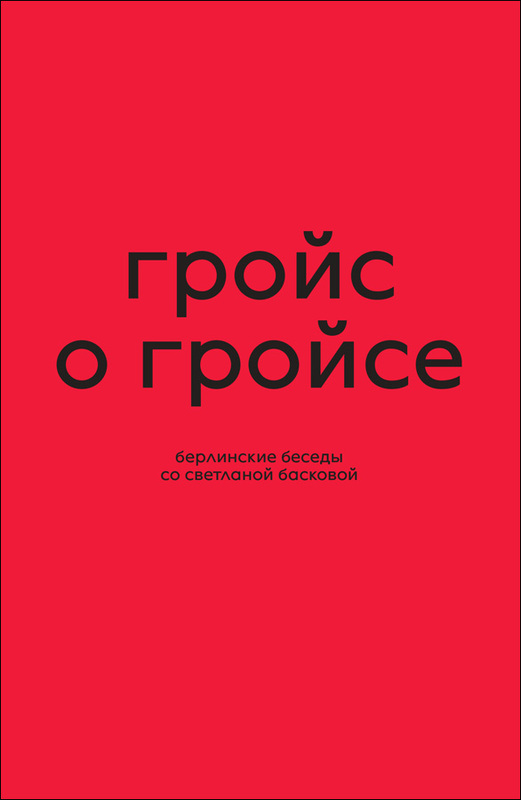
Пособием по инакомыслию можно было бы назвать эту книгу. Искусствовед, философ, публицист Борис Ефимович Гройс в беседах с кинорежиссером, художницей, куратором Светланой Басковой затрагивает значимые моменты в истории культуры России и Европы ХХ века. Двойственная природа советского антисемитизма под видом «борьбы с космополитизмом», с которой будущий автор книги «Gesamtkunstwerk Сталин» столкнулся в раннем детстве, — как первые уроки социальной психологии. Коктебель 60-х, место встречи творческой богемы, доживающих свой век персонажей Серебряного века и советских интеллектуалов, — как одно из средоточий альтернативной культуры. Московский концептуализм и самиздат — как часть общемирового культурного процесса 60–70-х и как побег от советской действительности. КГБ-шные методы 80-х, эмиграция, культурная и университетская среда Европы 90-х… Страх, сопротивление, свобода. Личное и социальное. Случайность и закономерность. Что общего между Дмитрием Приговым и Тейлор Свифт? Как идеология управляет эмоциями? Как культура превращает мусор в метафизику? Как слово становится формой противостояния? Об этом и многом другом Борис Гройс говорит «и в шутку, и всерьез».
This book could well be called a handbook of dissent. In conversations with the filmmaker, artist, and curator Svetlana Baskova, the art historian, philosopher, and essayist Boris Groys touches on key moments in the cultural history of twentieth-century Russia and Europe. There is the double nature of Soviet antisemitism, disguised as the "struggle against cosmopolitanism," which the future author of The Total Art of Stalinism (Gesamtkunstwerk Сталин) encountered in early childhood, as his first lessons in social psychology. There is Koktebel in the 1960s, a meeting place for bohemian artists, the last surviving figures of the Silver Age, and Soviet intellectuals, as one of the centers of alternative culture. There are Moscow Conceptualism and samizdat, both as part of the worldwide cultural movement of the '60s and '70s and as an escape from Soviet reality. And then the KGB's methods in the 1980s, emigration, the cultural and academic world of 1990s Europe… Fear, resistance, freedom. The personal and the social. Chance and necessity. What do Dmitri Prigov and Taylor Swift have in common? How does ideology govern emotions? How does culture turn trash into metaphysics? How does the word become a form of resistance? Groys talks about all this and much more, "both in jest and in earnest."