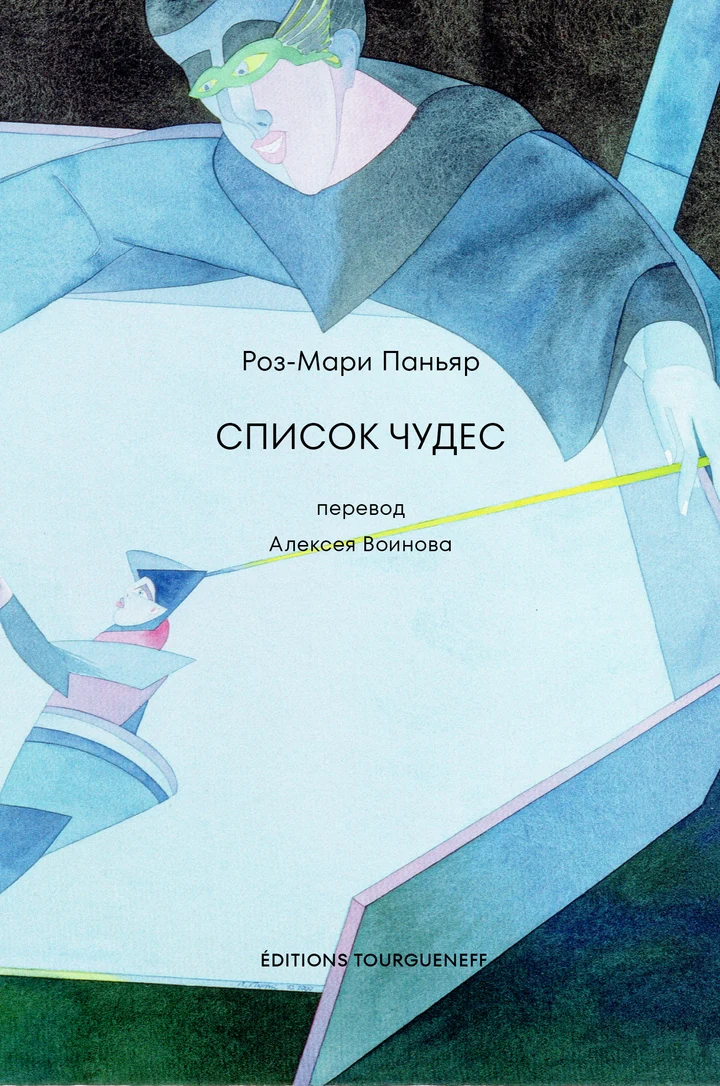
Каким оказывается восприятие реальности, когда война, идущая в тысячах километров, становится частью твоей повседневности — новостей, разговоров, снов? В центре новой книги крупнейшей швейцарской писательницы Роз-Мари Паньяр «Список чудес» — две сестры из Украины, Мария и Полина, бежавшие от войны и поселившиеся у Жеральдин, дочери рассказчицы, которая ведет свой «список чудес»: записывает встречи, мысли, сновидения и странные совпадения, словно составляя документ для «будущего поколения, другого, пока ещё невообразимого». В этом реестре появляются потерявшийся мальчик, бесконечно длинный стол маленького диктатора, ярмарка вооружений, тайна, пророческие книги, стиральный порошок со скидкой, голубизна незабудок — и будни двух женщин, которым пришлось покинуть свою страну.
«Список чудес» — не рассказ о войне, увиденной из безопасной Швейцарии. Скорее, это попытка зафиксировать состояние сознания, в которое вторгается катастрофа. Война происходит далеко — и одновременно оказывается повсюду: в памяти, страхах, разговорах, покупках, прочитанных книгах, абсурдных снах.
Так возникает проза Паньяр — одновременно тревожная и нежная, трагическая и ироничная. Реальность здесь настолько невероятна, что почти сама превращается в магический реализм.
What does the perception of reality become when a war being fought thousands of kilometers away becomes part of your everyday life — of the news, of conversations, of dreams?
At the center of Spisok chudes (The List of Wonders), the new book by the major Swiss writer Rose-Marie Pagnard, are two sisters from Ukraine, Maria and Polina, who have fled the war and settled with Géraldine, the narrator's daughter. The narrator keeps her own "list of wonders," recording encounters, thoughts, dreams, and strange coincidences, as though compiling a document for "a future generation, a different one, still unimaginable." Into this register come a lost boy, the endlessly long table of a small dictator, an arms fair, secret, prophetic books, discounted laundry detergent, the blue of forget-me-nots, and the daily life of two women who have had to leave their country.
Spisok chudes is not an account of the war as seen from safe Switzerland. It is rather an attempt to record a state of consciousness invaded by catastrophe. The war is happening far away and is everywhere at once: in memory, in fears, in conversations, in shopping, in books read, in absurd dreams.
This is how Pagnard's prose comes about: anxious and tender at once, tragic and ironic. Reality here is so improbable that it almost turns into magical realism by itself.