訳者あとがき 高柳聡子
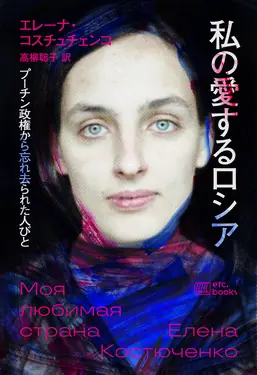
本書は、ロシア人ジャーナリスト、エレーナ・コスチュチェンコのМоя любимая страна の全訳である。
原書はロシア語で執筆されたのだが、その反政府的な内容から、最初に英語版I Love Russia:Reporting from a Lost Country が、ロンドンのThe Bodley Head Ltd. から2023年10月に刊行されると発表された。ここ数年の厳しい言論統制下ではロシア国内でのロシア語オリジナル版の出版は難しいかと思っていたが、独立系メディア「メドゥーザ」が出版部門を立ち上げ、同書の刊行を決定、英語版とほぼ同時にロシア語版も世に出ることになった。こうした経緯には、コスチュチェンコが2021年にロシア政府により「外国の代理人」に指定されたことが大きな理由としてある(ちなみに、「メドゥーザ」も「外国の代理人」リストに入っている)。
私は、コスチュチェンコが本を執筆していることは知っていたが、ロシア語版の刊行が決まっていなかったため、残念に思いながら英語版の予約をした。すると、2023年6月に、ロシアの反戦組織フェミニスト反戦レジスタンスのSNSに本書の第13章にあたる「戦争(私はどんなふうに育ったか)」のロシア語原文が公開されたのである。それをぜひ多くの人に読んでほしいと思った私はすぐに翻訳を始め、翌日に自身のブログ上で邦訳を公開した。
多くの方が読んでくれた上に、その中のひとりであるエトセトラブックスの松尾さんから、出版できないかという連絡をいただいた。コスチュチェンコに、日本のフェミニスト出版社があなたの本を出したいと言っている、と連絡したところ、「ありがとう。私はフェミニストです。私をフェミニストのジャーナリストだと紹介してくれるのなら、とても嬉しい」という返答がきた。
そういうわけで、まだどこからも出版されていない時に、Word ファイルでロシア語版の原文を受け取り、訳出に取り掛かった。その後、刊行されたメドゥーザ版が底本となるよう全体を見直し、訳文を加筆・修正した。
エレーナ・コスチュチェンコは、モスクワから250キロほどのところにあるロシア西部の古都ヤロスラヴリで1987年に生まれた。ソ連崩壊前後の、とりわけ地方で生まれ育った世代によくあるように、彼女の幼少期にも貧しさがつきまとっている。母と養子に迎えた妹と弟との4人家族で、本書にも書かれているように、16歳のときから地元の地方紙『北の地方』でアルバイトを始めている。もちろん、これが後のジャーナリスト人生の始まりとなることは言うまでもない。ジャーナリストを志す前には詩人になるつもりだったと言ったこともあり、言葉を糧に生きる道は早くから考えていたようだ。そして、14歳のときにアンナ・ポリトコフスカヤやスヴェトラーナ・アレクシエーヴィチの書いた記事を読んだエレーナは、『ノーヴァヤ・ガゼータ』の記者になろうと決意する。
2004年に進学のためにモスクワへ出て、モスクワ大学ジャーナリスト学部に入り、翌2005年には『ノーヴァヤ・ガゼータ』での仕事を開始している。ちなみに、ロシアでは、自分で取材をし、メディアに記事を持ち込むなどして、在学中からプロとして仕事をするジャーナリストは少なくないが、それにしても、コスチュチェンコの優秀さは際立っているのではないだろうか。
私にはジャーナリストの仕事を評価する資格はないけれど、それでも、エレーナ・コスチュチェンコの傑出している点を挙げるならば、なんといってもその嗅覚の鋭さと勇敢さだろう。権力者は隠したがっているが、ジャーナリズムが取り上げるべきだという場所にはいつも彼女の姿があり、ほぼ衝動的ともいえる迅速さで現場に飛び込んでいる。その点は、同じく勇敢なジャーナリストで彼女が尊敬してやまないポリトコフスカヤとも、アレクシエーヴィチとも異なる熱量を感じる。
本書は、ジャーナリストとしてコスチュチェンコがこれまでに取材した中から選んだ代表的なルポルタージュと、彼女自身の子ども時代の回想やこれまでの経験を綴ったテクストから構成されている。コスチュチェンコは海外の取材も多く手掛けてきたが、本書には基本的にロシア国内のルポが選ばれている(戦禍のウクライナが例外としてある)。
広大なロシアの各地に足を運び、ベスランの学校占拠事件のような世界中に報道されたテロ事件から、地方都市の公害、さらには、廃病院で暮らす未成年の子どもたちや自動車道で身を売る女性たちのことなど、ともすれば忘れられがちな地方や大都市の周縁、消えつつある少数民族、クィアな人たち、障害をもつ人たちなど、終始ロシアに目を向けているはずの私たちも想像したことさえなかった一隅が可視化され、その現実を突きつけてくる。ルポルタージュというジャンルの威力を目の当たりにする思いがした。
さらに、政治の不手際が、中央からは死角となっている市井の人びとの生活の細部に綻びをもたらすこと、数年後に戦争を始める国で起きていたことが垣間見える気もする。大きな政治や大きな経済や軍の話をせずとも、私たちの生活がそれまでのように立ち行かなくなるとき、必要なものが手に入らなくなるとき、人間が粗野に扱われるようになるとき、私たちはその原因の責任の所在を明確にすべきなのだとあらためて教えられた思いだ。これは、今の日本に生きる私たちにとってもまったく他人事ではない。
コスチュチェンコはこれまでにも二冊の著書を出しているが(内容は本書とかなり重複しているルポルタージュ集)、この本の英語版の出版によって、世界的に知られることになった。英語版は2024年にイギリスのプーシキンハウス図書賞(スラヴ圏の理解を深めることに寄与した英語で出版された優れた書籍に与えられる賞)を授与されている。他にも、アンドレイ・サハロフ賞(2015)やアンナ・ポリトコフスカヤ賞(2020)などを受賞しており、本書に収められたルポルタージュの中でも、第9章「あなたの夫は志願して砲撃の中へ行った」は欧州報道賞(2015)、第10章「ベスランの夢」はカフカース地方の優れた報道に対して贈られるアフメドナビ・アフメドナビエフ賞の第二位となっているし(2016)、第12章「施設」はオープンロシア財団の「職業はジャーナリスト賞」(2021)と、自由な報道を目指すジャーナリストのためのレドコレギヤ賞(2021)を受賞している。コスチュチェンコは、いまロシア人でもっともよく知られるジャーナリストだといえるだろう。
『ノーヴァヤ・ガゼータ』紙は、2021年に編集長のドミトリイ・ムラトフがノーベル平和賞を受賞したことで日本でも知られるようになったが、もともとは1993年にミハイル・ゴルバチョフ元大統領がノーベル平和賞の賞金を元手に創設した新聞社である。
「ノーヴァヤ・ガゼータ」とは「新しい新聞」を意味し、言論の自由と真実の報道をポリシーに報道を行ってきた。したがって、この新聞社は必然的に政権批判の矢面に立つこととなり、多くの読者の支持を得るとともに、激しい弾圧にも晒されてきた。その結果、第14章で語られるように、殺害されたジャーナリストたち6人の遺影が会議室に並ぶ事態に至ったのである。それだけでも衝撃的だが、未遂に終わった暴力事件や脅迫などを含めれば、被害件数は数知れない。
そして、コスチュチェンコ自身、一度ならず危険な目に遭っている。ウクライナの取材に入ったコスチュチェンコの暗殺指示が出ていたこと、ドイツのカフェで飲み物に毒を入れられた可能性があることなど、自分の身に起きた恐るべき出来事を綴ったエッセイが2023年8月に複数の言語で一斉に報道されている。このエッセイを世界に向けて公開するにあたって、コスチュチェンコは「生きていたいから書く」と告白している。
このエッセイについては、私がコスチュチェンコ本人から日本語への翻訳とメディアへの掲載を依頼されたのだが、応じてくれるメディアがなかなか見つからず、ひと月遅れの9月になってようやく「文春オンライン」に掲載された(「私はこうして殺されかけた」ロシア国内で戦争報道に尽力した女性記者が告発…プーチン政権による「言論統制」、2023年9月15日)。メディア探しの労を取ってくれたエトセトラブックスの松尾さんと掲載を快諾してくれた「文春オンライン」の笹川智美さんには今も感謝している。
数年前までロシアには多くの独立系メディアがあった。過去形で言わざるを得ないのは、現在はそのほとんどが反体制的とみなされて国内での活動ができなくなっており、国外へと拠点を移しているからだ。コスチュチェンコが所属し、心から愛していた『ノーヴァヤ・ガゼータ』も2022年にロシア政府の圧力により報道機関としての登録を取り消される可能性が生じたため、新聞の発行を停止。その後、記者たちは国外へ出て、現在はラトヴィアの首都リガで『ノーヴァヤ・ガゼータ・ヨーロッパ』を立ち上げ、縮小しながらも報道を続けている。
さらにコスチュチェンコは、LGBT活動家でもある。彼女自身、レズビアンであることを以前からオープンにしており、それについては本書でも章を割いている。
活動家として知られ出したのは、2011年にモスクワで行われたプライド・パレードに参加する際に、自身のブログに「私が今日ゲイ・パレードに行く理由」という投稿を行い、ホモフォビアや同性愛者に対する差別に反対し、セクシャルマイノリティに平等な権利を要求するアピール文を出したことが大きい。投稿は大反響を呼び、パレード中にコスチュチェンコは正教徒を名乗る男に殴打され、救急搬送される事件にもなった。
この頃からロシア国内では、後に同性愛宣伝禁止法の制定に至る動きが活発化しており、同時に街頭では同性愛者の自由と権利を求める活動が増えていった。そんな中、コスチュチェンコは、2012-13年にかけて4回にわたり「キスの日」アクションを呼びかけ、新法案の読会が行われるのに合わせて国会前でキスをするフラッシュモブを行った。その後もゲイ・プライドや抗議運動を続け、一度ならず警察に拘束されている。それでも今となっては、ロシアでゲイ・プライドが開催されていたことがまるで夢のようだ。
プライベートでは、2024年3月に滞在先のヨーロッパでパートナーのヤーナ・クーチナとの結婚を発表。ヤーナ本人がインタビューで自分は(脳性麻痺による)障害をもつレズビアンだと話しているが、彼女もジャーナリストであり、さらに他の障害者の支援活動も行っている。
このように、ジャーナリストとしてのコスチュチェンコの仕事と彼女自身の人生は、おそらく、切り離すことのできないものとしてある。ジャーナリストになることは、彼女にとって生き方の選択でもあったのだと思う。そして、現在のプーチン政権下のロシアが、同性愛者としてもジャーナリストとしてもコスチュチェンコを排除しようとしたことを考えれば、法の外に置かれた人びと、法がすくいあげようとしない人びとの声を、時には命がけで拾い集めに向かう彼女の姿勢を少しは理解できるかもしれない。
本書を読めばわかるように、コスチュチェンコは、記事にするために、ただ誰かに話してもらいに行くのではない。記事を書くことが目的で取材に行くのではない(と私には思える)。その人が存在していること、その人には声があること、他の誰のものでもないその人自身の声があることを伝えるために会いに行く。第12章に登場する脳性麻痺のスヴェータ・スカズネワという女性が、全身を震わせながら携帯電話に打ち込む文字で会話するときのように、カルテには決して書かれない患者の言葉と出会うために取材に行く。47歳で寝たきりのスヴェータは、娘をもちたいという夢も語ってくれた。この言葉を引き出せるのがコスチュチェンコの力ではないかと思う。この章を訳しているあいだずっと、日本で2016年に起きたやまゆり園の殺傷事件の被害者の方たちのこと、旧優生保護法下で不妊手術を強いられた方たちのことを考えていた。
私は普段から『ノーヴァヤ・ガゼータ』の記事にはまめに目を通していたほうだったから、本書に収められたルポの多くは読んだことのあるものだった。それでも、翻訳を通して、ネット上でニュースを読むときに自分がいかに雑に視線を走らせているだけかということを痛感することになった。翻訳の機会を得て、しっかりと読み返すことができたのは幸運だとしか言いようがない。
ロシアに行くと、モスクワとペテルブルクを移動するのに「サプサン」を利用することも増えた。深夜の夜行列車に乗って早朝に到着していた頃に比べ、日中の3〜4時間で到着するこの特急列車は便利で快適なものだが、その沿線に住む人たちの生活のことなど少しも考えたことがなかった自分を恥ずかしく感じ、自動車道で売春をする女性たちも、ホヴリノ病院に暮らす若者たちも、現代の映画の一場面のように錯覚しそうになった。けれども、彼/彼女たちの生きた言葉が、これは現実なのだと、その都度、私の意識を引き戻してくれた。本書と向き合いながら、言葉とはこんなにも強いツールなのかと何度も思った。
翻訳の作業は常に楽しく苦しいものだけれど、言葉と向き合って生きる者として、若きジャーナリストから多くを学びながら、私もまた一個人として本書に登場する人たちと出会っていった。彼/彼女たちの日常と誠実に向き合いたいと願いたくなる出会いとなった。
さらに、コスチュチェンコに穏やかで健康な日常が戻り、再び取材に飛び回ることができるよう、堂々とロシアに帰国し家族と再会できることを切に願っている。
コスチュチェンコは戦争が始まった当日の2022年2月24日にウクライナ入りし取材を始めたが、それ以降、ロシアに帰国できないままだ。ヨーロッパに滞在中だが、以前からの鬱病に加え、服毒事件の後遺症もあって不調が続いており、現在は仕事をかなり制限している。それでもずっと、母と妹が待つロシアへ帰りたいと言っていた。
命を狙われることもある彼女とは連絡を取る手段も限られており、また、体調が安定しないため数か月間どこにも姿を見せないことも多い。翻訳中、質問があればなんでも訊いてと言ってくれて、調子のよい時には私の質問に答えてくれたが難しい日も多かった。邦訳が出版されたという知らせが少しでもエレーナの心を元気づけてくれるといいと思う。
最後になったが、コスチュチェンコと私を繫いでくれたのは、詩人・作家で反戦活動家のダリア・セレンコだ。ロシアのフェミニストたちのネットワークの強さは常に私を助けてくれる。いつもありがとう。
それから、本書の翻訳出版を決断してくれたエトセトラブックスの松尾亜紀子さんと、出版までのあらゆる作業に携わってくださった皆さまにも心からの感謝を申し上げたい。
この訳書が日本語の読者にどんな印象を与えるのか、私は想像できていない。けれども、ウクライナのことを考えながら、そして、ガザでの非人道的な虐殺や子どもたちが飢えに苦しむ姿を目にしながら、停めたいと願う人は誰も停めることができず、停める力を持つ者たちは誰も停めようとしないこんな世界になんの希望があるのかと思う瞬間に満ちた日々の中で、私たちには、いま眼前にある差別や暴力、理不尽で不誠実な政治を告発する言葉があるのだということを知ってほしい。本書に書かれていることは、決して他人事ではないということを。
私の敬愛する若きジャーナリスト、エレーナ・コスチュチェンコの大切な言葉がひとりでも多くの人の心に届きやがて力強く芽吹きますように。
2025年8月24日
Translator's Afterword by Satoko Takayanagi
This book is a complete translation of "My Beloved Russia" by Russian journalist Elena Kostyuchenko.
The original was written in Russian, but due to its anti-government content, an English version, "My Beloved Russia," was announced to be published first by The Bodley Head Ltd. in London in October 2023. Under the strict censorship of recent years, it was thought that publishing the original Russian version within Russia would be difficult. However, the independent media outlet "Meduza" established a publishing division and decided to publish the book, resulting in the Russian version being released almost simultaneously with the English version. A major reason for this development is that Kostyuchenko was designated a "foreign agent" by the Russian government in 2021 (incidentally, "Medusa" is also on the "foreign agent" list).
I knew that Kostyuchenko was writing a book, but since there was no decision to publish a Russian version, I reluctantly pre-ordered the English version. Then, in June 2023, the Russian original of Chapter 13, "War (How I Grew Up)," was published on the social media of the Russian anti-war organization, Feminist Anti-War Resistance. Wanting many people to read it, I immediately began translating it and published the Japanese translation on my blog the next day. Many
people read it, and one of them, Ms. Matsuo from Etcetera Books, contacted me to ask if it would be possible to publish it. When I contacted Kostyuchenko and told her that a Japanese feminist publisher wanted to publish her book, she replied, "Thank you. I am a feminist. I would be very happy if you introduced me as a feminist journalist."
And so, before it had been published anywhere, I received the Russian original in a Word file and began translating it. Subsequently, the entire text was revised and the translation was expanded and corrected to use the Medusa edition that was later published as the base text.
Elena Kostyuchenko was born in 1987 in Yaroslavl, an ancient city in western Russia, about 250 kilometers from Moscow. Like many generations born and raised in rural areas around the time of the collapse of the Soviet Union, poverty was a constant presence in her childhood. She lived with her mother and adopted sister and brother, and as described in this book, she began working part-time at the local newspaper, "Northern Region," when she was 16. Needless to say, this marked the beginning of her career as a journalist. She has said that she had intended to become a poet before aspiring to be a journalist, suggesting that she had considered a life sustained by words from an early age. At the age of 14, after reading articles by Anna Politkovskaya and Svetlana Alexievich, Elena decided to become a reporter for Novaya Gazeta.
In 2004, she moved to Moscow to study, enrolling in the Faculty of Journalism at Moscow State University, and the following year, 2005, she began working for Novaya Gazeta. Incidentally, in Russia, it's not uncommon for journalists to work professionally while still in school, conducting their own interviews and pitching their articles to the media. Even so, Kostyuchenko's talent is truly remarkable.
I am not qualified to evaluate the work of journalists, but if I were to point out what makes Elena Kostyuchenko outstanding, it would undoubtedly be her keen intuition and courage. Where those in power try to hide, but where journalism should cover, she is always there, and she jumps into the scene with an almost impulsive speed. In that respect, I sense a different kind of passion in her than in Politkovskaya and Alexievich, who are also courageous journalists whom she deeply respects.
This book is comprised of representative reportage selected from Kostyuchenko's journalistic work, along with her own childhood recollections and texts detailing her experiences. While Kostyuchenko has covered many international assignments, this book primarily features reports from within Russia (with the exception of war-torn Ukraine).
Traveling to various parts of vast Russia, she covers everything from terrorist incidents reported worldwide, such as the Beslan school siege, to pollution in provincial cities, and even the lives of underage children living in abandoned hospitals and women selling their bodies on highways. She brings to light corners of Russia that are often forgotten, the fringes of cities and rural areas, disappearing ethnic minorities, queer people, and people with disabilities—corners we, who always keep our eyes on Russia, had never even imagined—and confronts us with their realities. It was a powerful experience witnessing the strength of the reportage genre.
Furthermore, it seems we can glimpse how political incompetence can cause cracks in the details of the lives of ordinary people, which are often blind spots from the central government, and what was happening in a country that would later start a war. Without even discussing major political, economic, or military matters, when our lives become unmanageable, when we can no longer obtain what we need, or when people are treated crudely, we are reminded that we must clearly identify who is responsible for the cause. This is not something that we, living in Japan today, can ignore.
Kostyuchenko had previously published two books (both collections of reportages that largely overlap with this book), but it was the publication of the English edition of this book that brought him international recognition. The English edition was awarded the Pushkin House Book Prize in 2024 (an award given to outstanding books published in English that contribute to a deeper understanding of the Slavic world). He has also received other awards, including the Andrei Sakharov Prize (2015) and the Anna Politkovskaya Prize (2020). Among the reportages included in this book, Chapter 9, "Your Husband Volunteered for the Shelling," won the European Press Award (2015), Chapter 10, "Beslan's Dream," came in second place for the Akhmednabi Akhmednavyev Prize, awarded for outstanding reporting in the Caucasus region (2016), and Chapter 12, "Institutions," won the Open Russia Foundation's "Profession is Journalism Award" (2021) and the Red Collegia Prize for journalists striving for freedom of the press (2021). Kostyuchenko is arguably the most well-known journalist in Russia today.
Novaya Gazeta, which became known in Japan in 2021 when its editor-in-chief, Dmitry Muratov, received the Nobel Peace Prize, was originally founded in 1993 by former President Mikhail Gorbachev using the prize money from his Nobel Peace Prize.
"Novaya Gazeta" means "new newspaper," and it has always operated with a policy of freedom of speech and truthful reporting. Consequently, the newspaper inevitably became the front line of criticism against the government, gaining the support of many readers but also being subjected to fierce repression. As a result, as described in Chapter 14, the portraits of six murdered journalists were lined up in the conference room. This alone is shocking, but if you include attempted violence and threats, the number of victims is countless.
Furthermore, Kostyuchenko herself has been in danger more than once. An essay detailing the horrific events that befell her, including the possibility of an assassination order being issued while she was reporting in Ukraine and the possibility of her drink being poisoned in a German cafe, was published simultaneously in multiple languages in August 2023. When publishing this essay to the world, Kostyuchenko confessed, "I am writing because I want to live."
I was asked by Kostyuchenko herself to translate this essay into Japanese and have it published in the media, but it was difficult to find a media outlet willing to do so, and it was finally published a month late in September on "Bunshun Online" ( "How I Was Almost Killed": A Female Journalist Who Dedicated Herself to War Reporting in Russia Makes an Accusation... "Censorship" by the Putin Regime , September 15, 2023). I am still grateful to Mr. Matsuo of Etcetera Books for his efforts in finding a media outlet, and to Ms. Tomomi Sasagawa of "Bunshun Online" for readily agreeing to publish it.
Until a few years ago, Russia had many independent media outlets. I have to use the past tense because most of them are now considered anti-establishment and are unable to operate domestically, forcing them to relocate abroad. Novaya Gazeta, the newspaper that Kostyuchenko belonged to and loved dearly, also ceased publication in 2022 due to the possibility of having its registration as a news organization revoked under pressure from the Russian government. After that, the journalists went abroad and have now established Novaya Gazeta Europe in Riga, the capital of Latvia, continuing their reporting, albeit on a smaller scale.
Furthermore, Kostyuchenko is also an LGBT activist. She has long been open about being a lesbian, a topic that is even covered in this book. She first
gained recognition as an activist in 2011 when she posted a blog entry titled "Why I'm Going to the Gay Parade Today" while attending a Pride parade in Moscow. In the post, she protested homophobia and discrimination against homosexuals and demanded equal rights for sexual minorities. The post caused a huge stir, and during the parade, Kostyuchenko was assaulted by a man claiming to be an Orthodox Christian and had to be taken to the hospital.
Around this time, movements to later enact a law banning the promotion of homosexuality intensified in Russia, and at the same time, street activities demanding the freedom and rights of homosexuals increased. Amidst this, Kostyuchenko called for four "Kiss Day" actions between 2012 and 2013, and held a flash mob kissing people in front of the parliament during readings of new legislation. She continued to participate in gay pride and protests, and has been detained by the police more than once. Even so, it now seems like a dream that a gay pride event was ever held in Russia.
In her private life, she announced her marriage to her partner, Yana Kuchina, in March 2024 while staying in Europe. Yana herself has stated in interviews that she is a lesbian with a disability (due to cerebral palsy), and she is also a journalist and involved in supporting other people with disabilities.
Thus, Kostyuchenko's work as a journalist and her own life are perhaps inseparable. Becoming a journalist was, I believe, a choice of how to live. And considering that Russia under the current Putin regime has tried to exclude Kostyuchenko both as a homosexual and as a journalist, we can perhaps understand a little more her stance of sometimes risking her life to gather the voices of those who are outside the law, those whom the law fails to help.
As you will see from reading this book, Kostyuchenko doesn't just go to people to get them to talk in order to write an article. It doesn't seem to me that she goes to interviews with the sole purpose of writing an article. She goes to meet people to convey that they exist, that they have a voice, a voice that belongs to no one else but themselves. Like Sveta Skazneva, a woman with cerebral palsy featured in Chapter 12, who communicates through text messages on her cell phone while her whole body trembles, Kostyuchenko goes to interview patients to encounter the words that are never written in medical records. Sveta, 47 and bedridden, also shared her dream of having a daughter. I believe it is Kostyuchenko's power that allows her to elicit such words. Throughout translating this chapter, I kept thinking about the victims of the 2016 Yamayuri-en massacre in Japan, and about those who were forced to undergo sterilization under the former Eugenic Protection Law.
I regularly read articles in Novaya Gazeta, so I had already read many of the reports included in this book. Nevertheless, through the translation process, I became acutely aware of how carelessly I skim news when reading it online. I consider myself fortunate to have had the opportunity to translate and carefully reread these articles. When I
go to Russia, I increasingly use the Sapsan train to travel between Moscow and St. Petersburg. Compared to the days when I would take an overnight train and arrive in the early morning, this express train, which arrives in 3-4 hours during the day, is convenient and comfortable. However, I felt ashamed of myself for never having given a thought to the lives of the people who live along the route, and I almost mistook the women prostituting themselves on the highway and the young people living in Khovlino Hospital for scenes from a modern movie. But each time, their living words brought me back to reality. As I read this book, I was repeatedly struck by how powerful a tool words truly are.
The translation process is always both enjoyable and challenging, but as someone who lives and breathes words, I learned a great deal from the young journalist, and I, too, met the people featured in this book as an individual. These encounters made me want to sincerely engage with their daily lives.
Furthermore, I sincerely hope that Kostyuchenko will regain a peaceful and healthy life, be able to travel around reporting again, and return to Russia proudly to be reunited with his family.
Kostyuchenko entered Ukraine on February 24, 2022, the day the war began, and started reporting, but has not been able to return to Russia since. She is currently staying in Europe, but in addition to her pre-existing depression, she continues to be unwell due to the after-effects of the poisoning incident, and is currently limiting her work considerably. Nevertheless, she has always said that she wants to return to Russia where her mother and sister are waiting for her. Because her
life is sometimes in danger, there are limited ways to contact her, and because her health is unstable, she is often not seen anywhere for several months at a time. During the translation, she told me to ask any questions I had, and when she was feeling well, she answered my questions, but there were many days when it was difficult. I hope that the news that the Japanese translation has been published will cheer Elena up even a little.
Last but not least, it was the poet, writer, and anti-war activist Daria Selenko who connected me with Kostyuchenko. The strength of the Russian feminist network has always helped me. Thank you always. I
would also like to express my heartfelt gratitude to Akiko Matsuo of Etcetera Books for deciding to translate and publish this book, and to everyone who was involved in all the work leading up to its publication.
I cannot imagine what impression this translation will make on Japanese readers. However, as we think about Ukraine, and as we witness the inhumane massacres in Gaza and the suffering of starving children, in days filled with moments when we wonder what hope there is in a world where no one who wants to stop it can stop it, and no one who has the power to stop it wants to stop it, I want us to know that we have words to denounce the discrimination, violence, and unreasonable and dishonest politics that are before our eyes. I want us to know that what is written in this book is not someone else's problem.
I hope that the important words of my beloved young journalist, Elena Kostyuchenko, will reach the hearts of as many people as possible and eventually blossom into something powerful.
August 24, 2025